
What Was the Uprising?
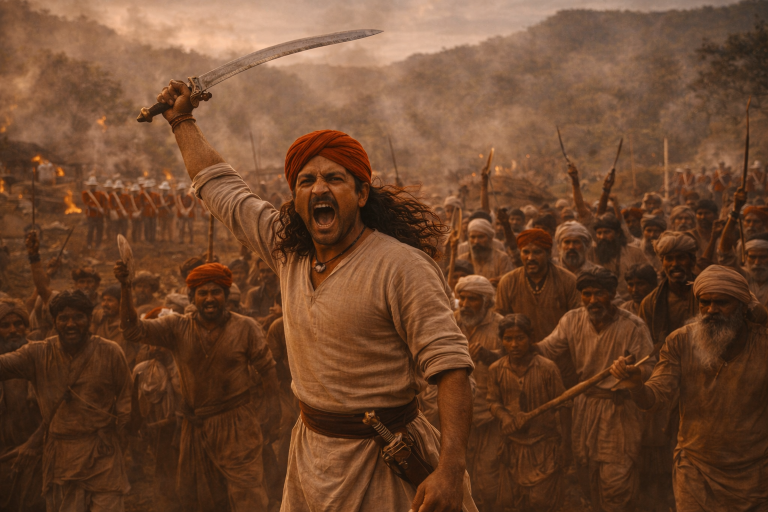
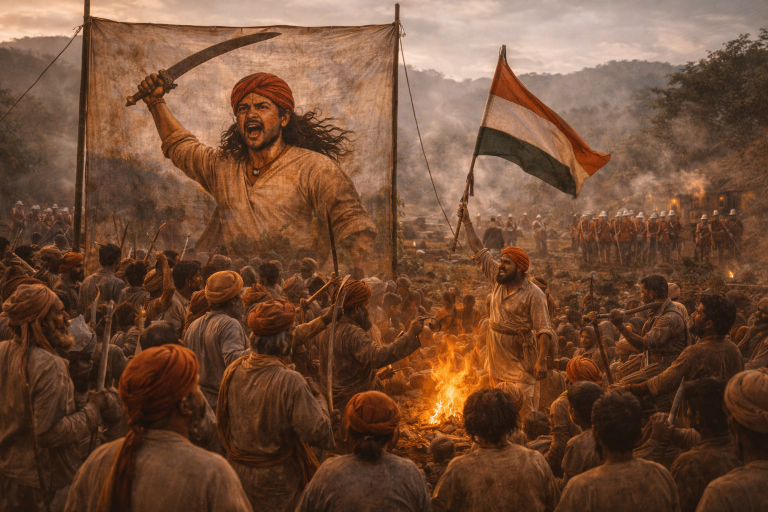
During the early nineteenth century, as the British East India Company tightened its control over western India, the rugged landscapes of the Western Ghats and the Deccan plateau became zones of tension and unrest. Among the most determined voices of defiance was Raghoji Bhangre, a leader from the Mahadev Koli community who refused to accept the erosion of tribal autonomy.
The uprising was not a sudden outbreak of violence, but the result of growing dissatisfaction with colonial policies that disrupted traditional systems of land ownership, forest access, and self-governance. British revenue settlements imposed heavy taxation on communities that had long lived through subsistence farming, forest produce, and customary rights over hills and valleys. Lands that once belonged collectively to tribal clans were brought under rigid administrative control, often transferred to moneylenders and intermediaries.
Defence of Land, Identity, and Freedom
During the early nineteenth century, as the British East India Company tightened its control over western India, the rugged landscapes of the Western Ghats and the Deccan plateau became zones of tension and unrest. Among the most determined voices of defiance was Raghoji Bhangre, a leader from the Mahadev Koli community who refused to accept the erosion of tribal autonomy.
The uprising was not a sudden outbreak of violence, but the result of growing dissatisfaction with colonial policies that disrupted traditional systems of land ownership, forest access, and self-governance. British revenue settlements imposed heavy taxation on communities that had long lived through subsistence farming, forest produce, and customary rights over hills and valleys. Lands that once belonged collectively to tribal clans were brought under rigid administrative control, often transferred to moneylenders and intermediaries.