
Voice of the Sacred Hills: The Ideals of a Tribal Revolutionary
A lasting contribution to global justice through principled legal reasoning, rights-centered judgments, and the advancement of international legal norms.
The Ideals That Guided the Resistance
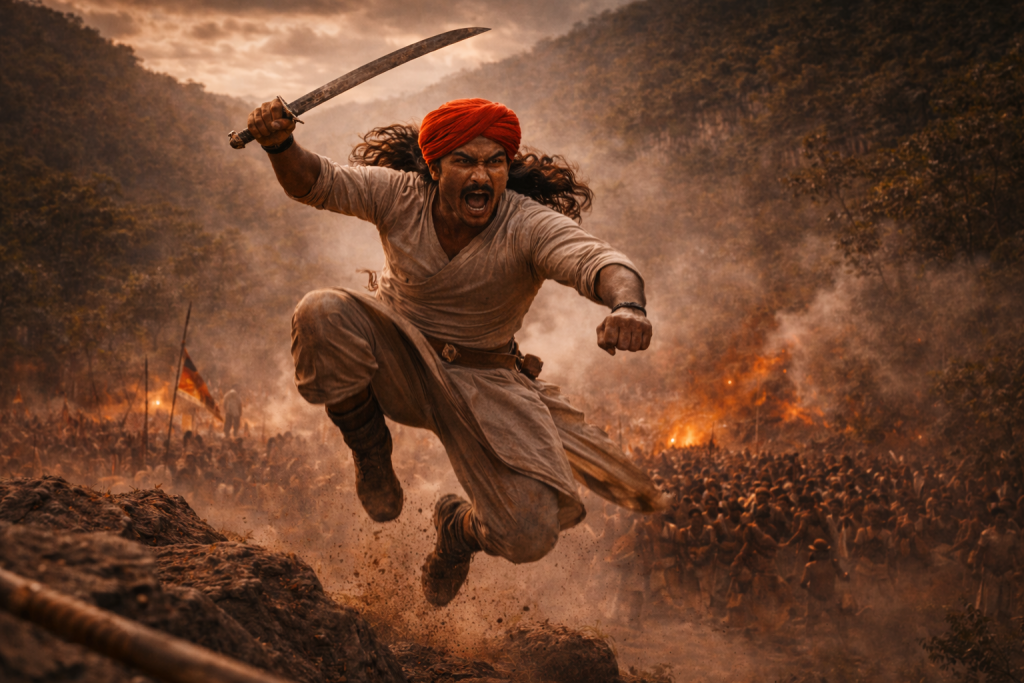
Raghoji Bhangre was not only a warrior of the hills but also a guardian of principles. His leadership reflected values deeply rooted in tribal tradition—collective responsibility, respect for nature, and unwavering courage in the face of injustice.
Protection of Land and Forest Rights
He taught that forests were living spaces that sustained tribal life through farming, grazing, and gathering. When colonial policies disrupted these rights, he emphasized unity in defending ancestral lands. His movement reinforced the belief that land rights were inseparable from dignity and survival.
Resistance Against Exploitative Revenue Systems
British revenue policies imposed heavy taxation on tribal farmers who depended on forest-based livelihoods. Raghoji Bhangre openly opposed these unjust demands.
Revival of Tribal Self-Governance
Before colonial interference, tribal communities managed their affairs through traditional councils and customary laws. Raghoji Bhangre supported the restoration of these indigenous systems.
Discipline, Strategy & Moral Conduct
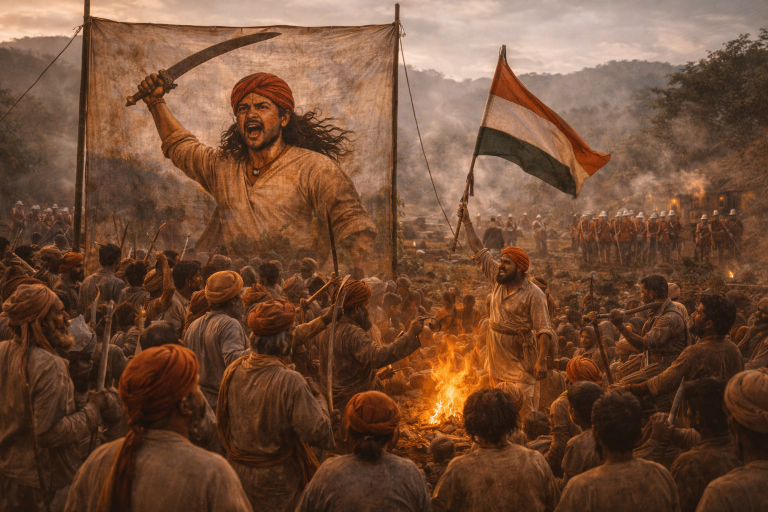
His resistance was not chaotic rebellion—it was disciplined and strategic. Fighters were instructed to protect civilians, avoid unnecessary harm, and act with responsibility.
Cultural Pride and Identity
Raghoji Bhangre reinforced pride in Mahadev Koli identity, traditions, and customs. Songs, oral traditions, and communal gatherings became tools of motivation and cultural preservation.
Long-Term Influence
Though his uprising was suppressed, the teachings of Raghoji Bhangre continued to influence later movements advocating for:

Tribal Land & Forest Rights Movements
Raghoji Bhangre’s stand against colonial land confiscation laid early groundwork for later movements demanding legal recognition of tribal forest rights.
Rise of Indigenous Political Awareness
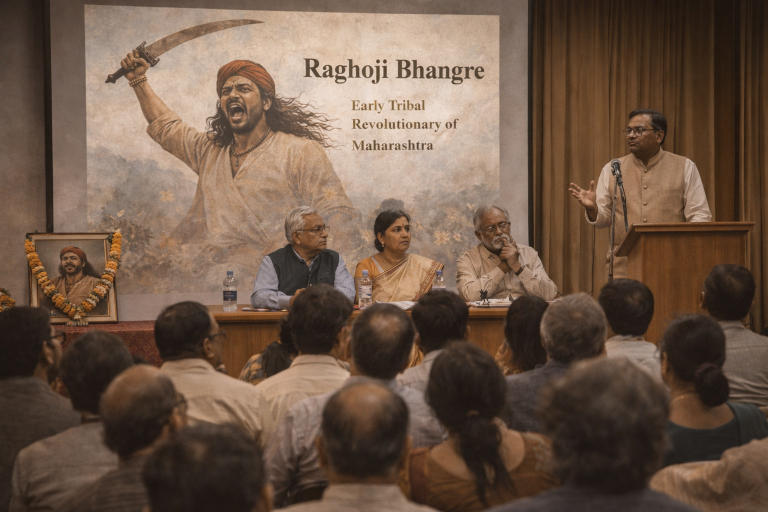
In the late nineteenth and early twentieth centuries, tribal communities increasingly asserted their political voice.
Cultural Preservation & Tribal Pride
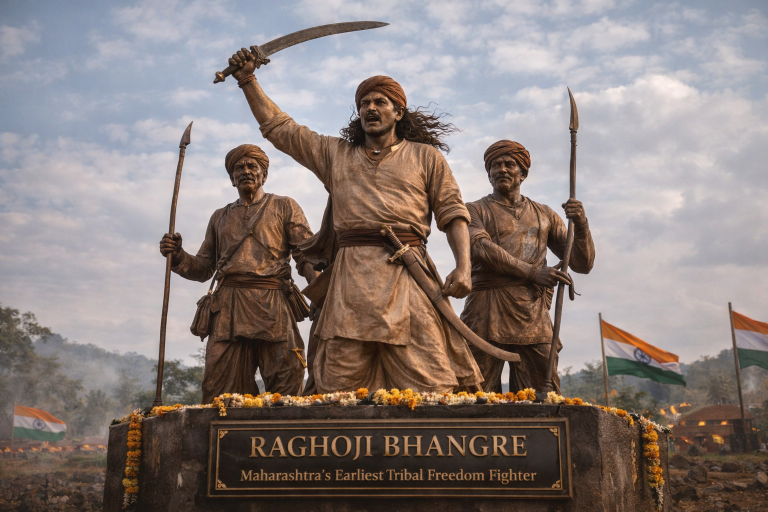
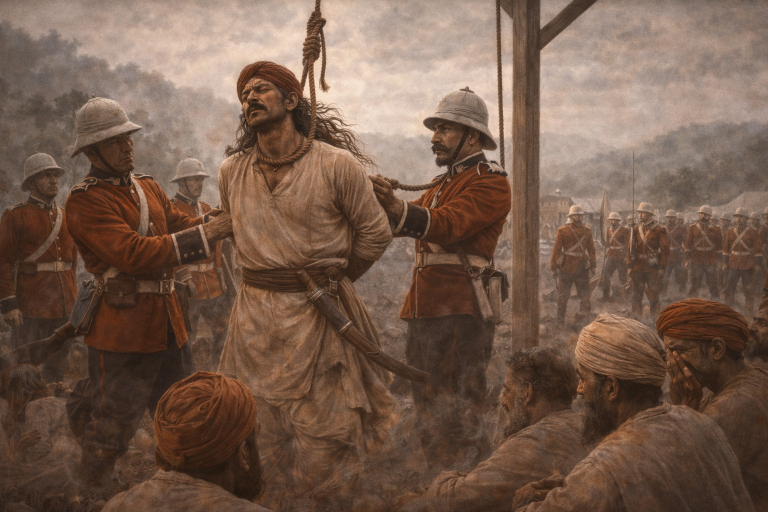
Long after his martyrdom, his story survived through folk songs, village narratives, and tribal storytelling traditions across the Sahyadri region.
Recognition in Modern History
During the twentieth century, historians and regional scholars began acknowledging Raghoji Bhangre as one of Maharashtra’s earliest organized tribal revolutionaries.