
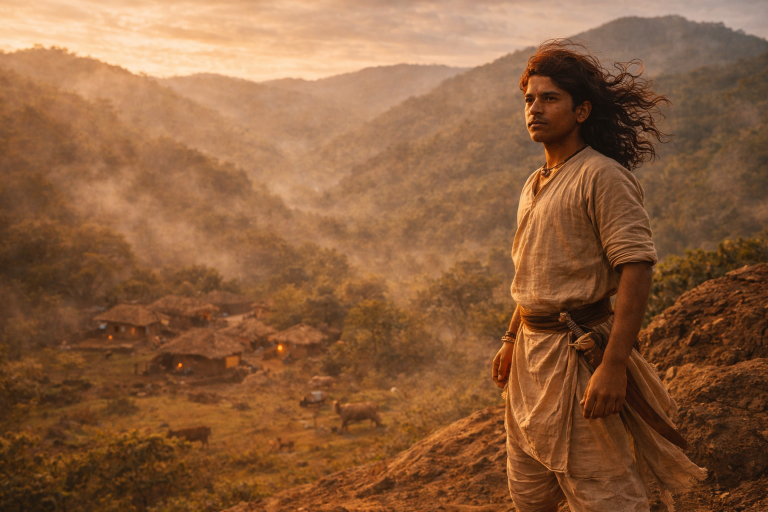
Early 1800s
Raghoji Bhangre was born in the Ahmednagar region of Maharashtra into the Mahadev Koli tribal community. His early life was deeply connected to the Sahyadri hills, forest traditions, and ancestral customs that shaped his identity and values.
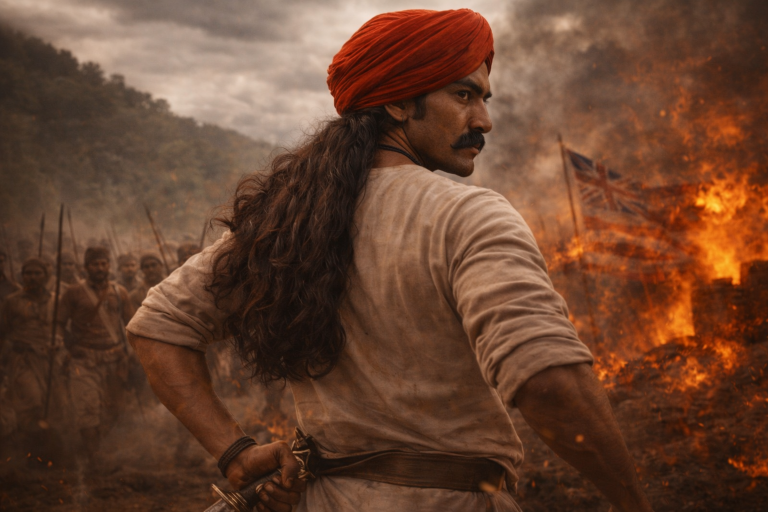
1820s
Growing up in the rugged terrain of the Sahyadri (Western Ghats), he mastered forest survival skills, traditional warfare techniques, and the warrior customs of the Mahadev Kolis.
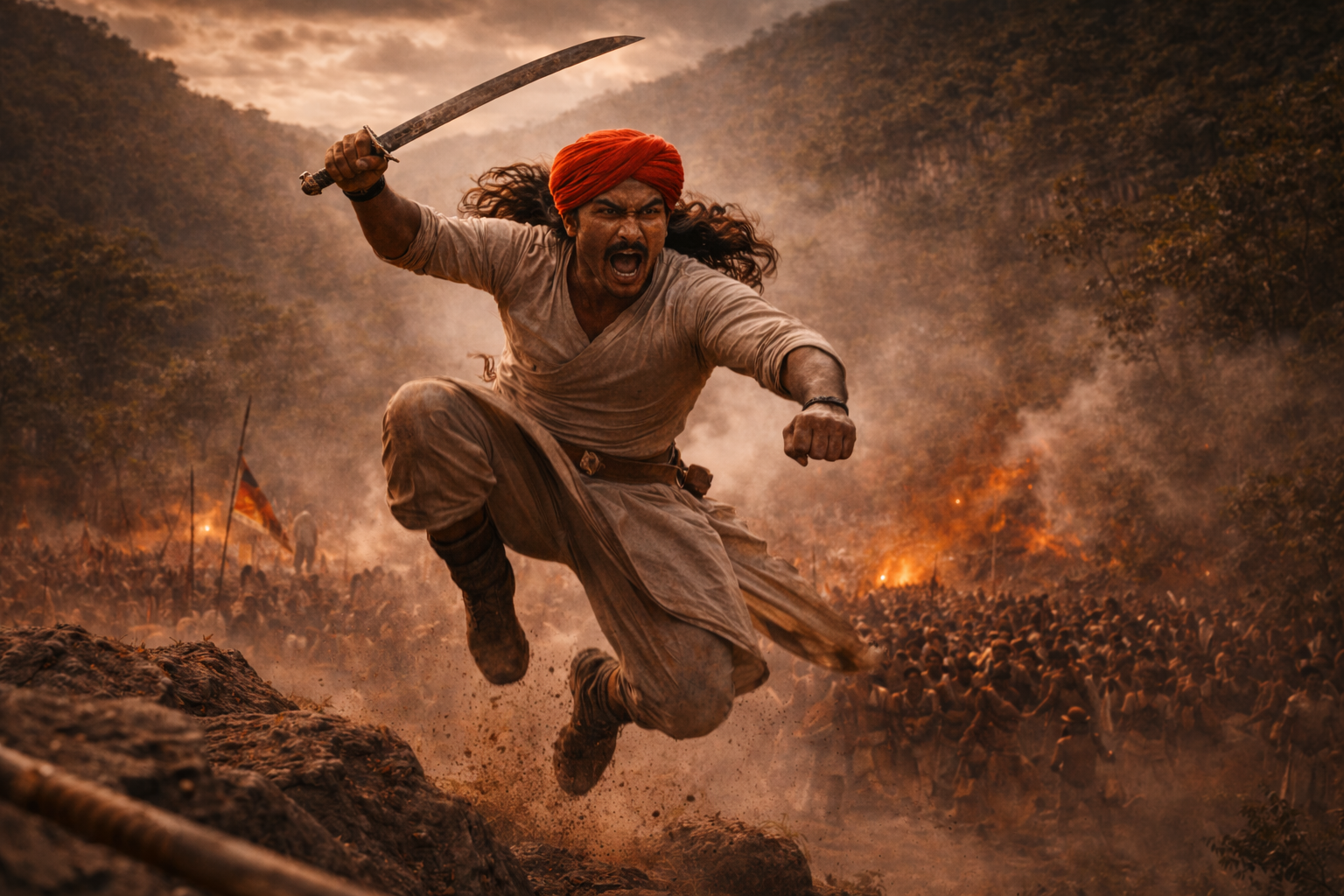
1830s
He witnessed increasing British interference in tribal administration, heavy taxation policies, and the disruption of traditional land rights across the Deccan region.
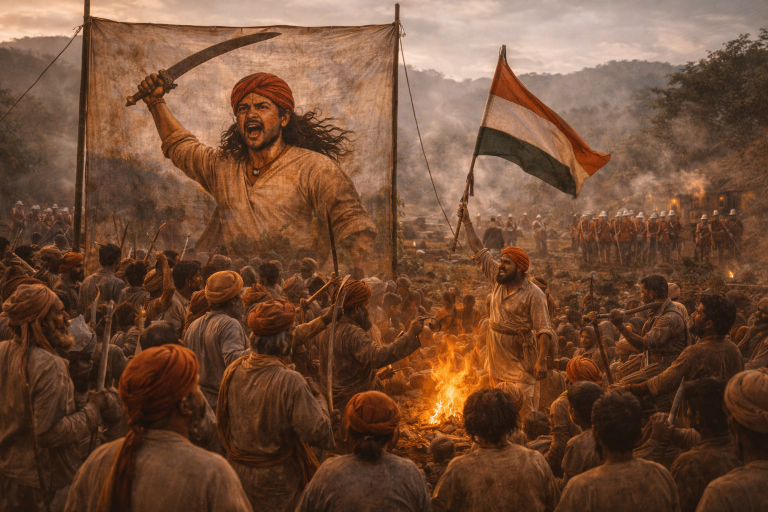
Early 1840s
Raghoji Bhangre began mobilizing tribal groups and local peasants against exploitative revenue systems imposed by British colonial authorities.
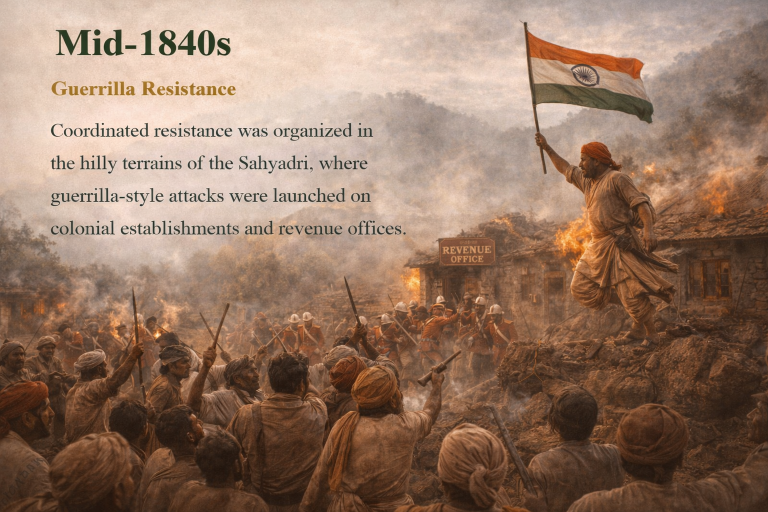
Mid-1840s
Coordinated resistance was organized in the hilly terrains of the Sahyadri, where guerrilla-style attacks were launched on colonial establishments and revenue offices.
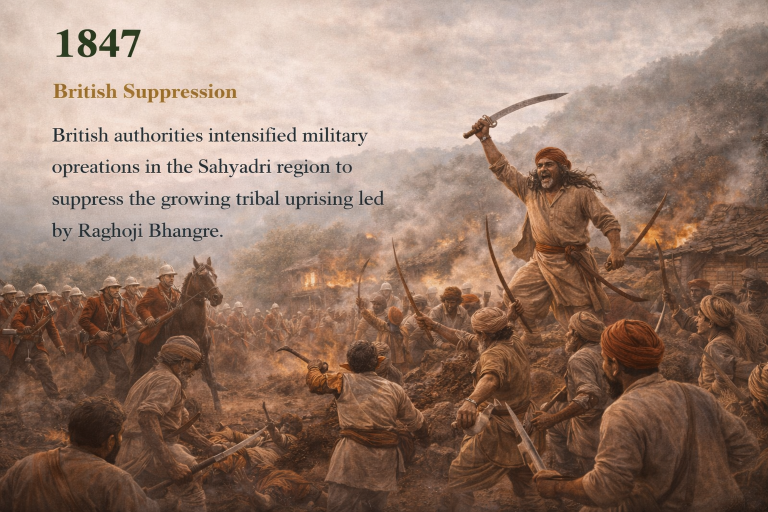
1847
British authorities intensified military operations in the Sahyadri region to suppress the growing tribal uprising led by Raghoji Bhangre.
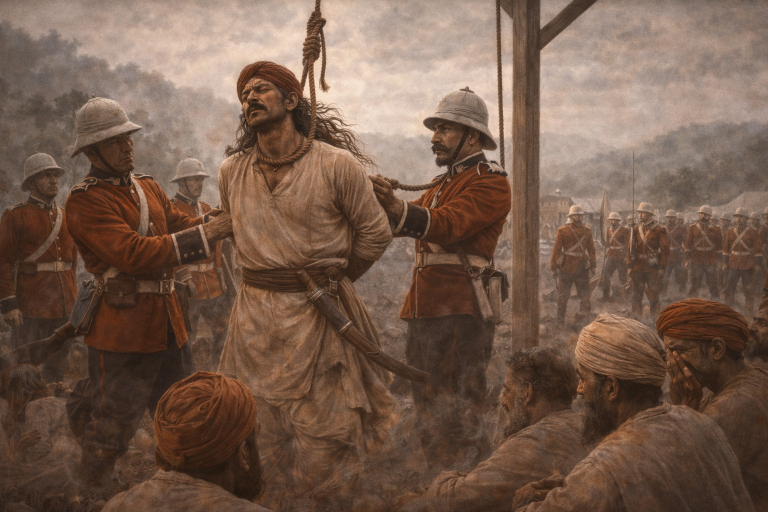
1848
After prolonged resistance, he was captured and executed by British authorities, marking him as one of Maharashtra’s earliest tribal martyrs.
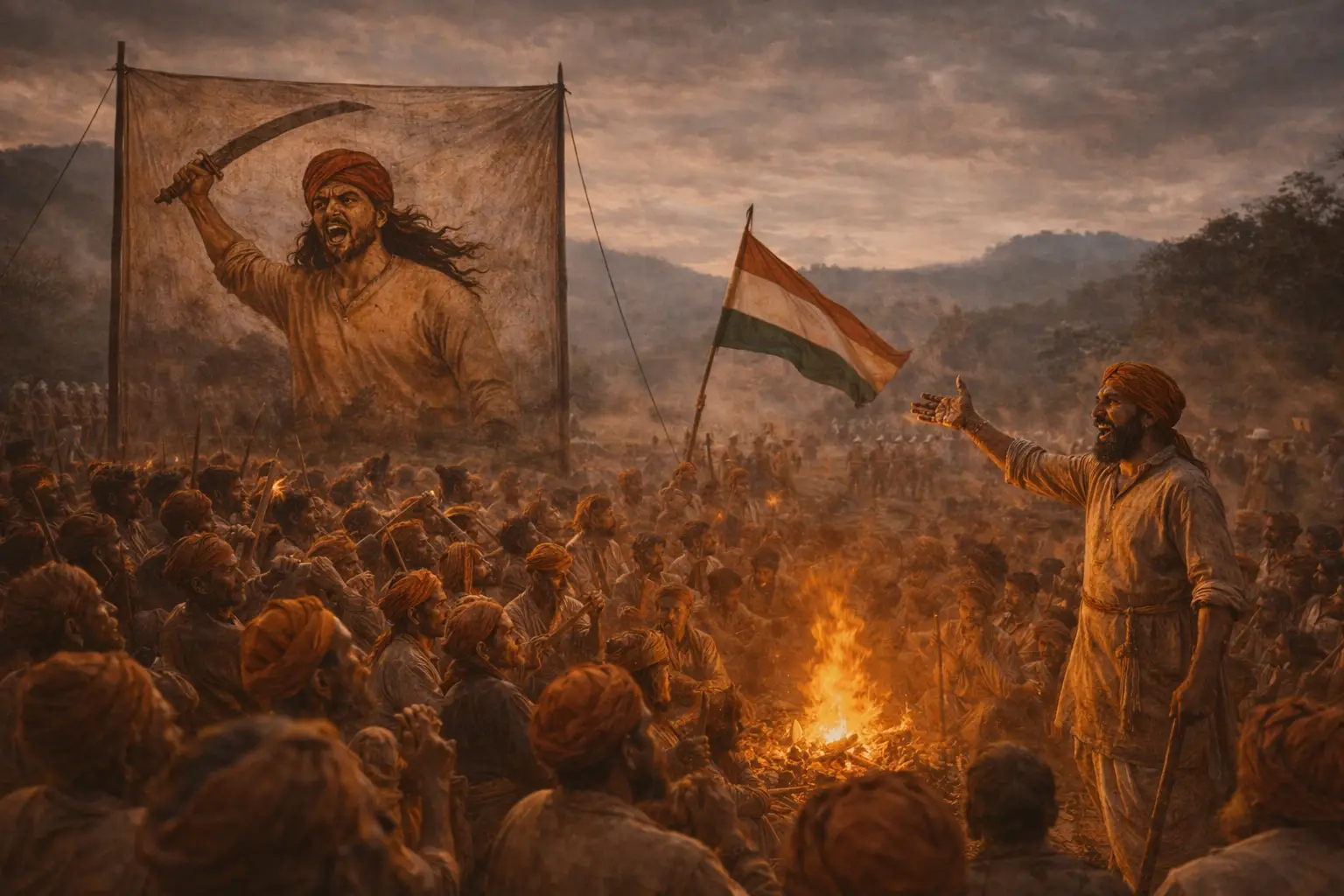
Late 19th Century
His story survived through oral traditions, tribal songs, and folklore across Maharashtra, keeping the memory of resistance alive.
20th Century
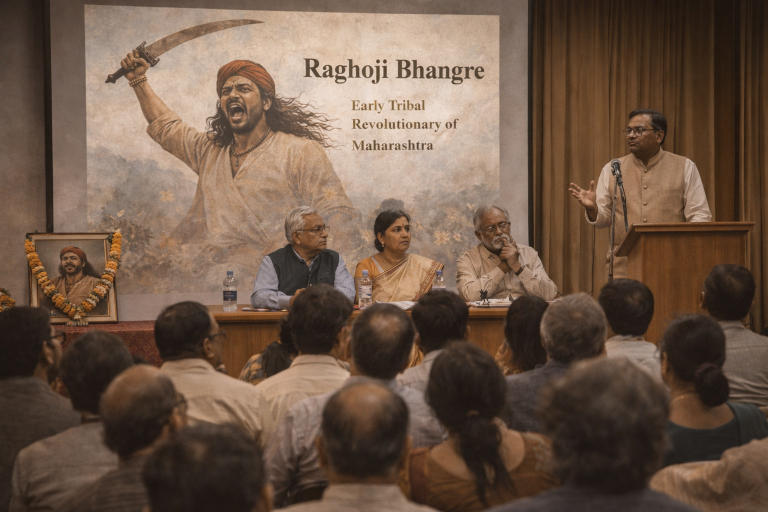
Historians and regional scholars recognized him as an early tribal revolutionary who resisted colonial oppression in Maharashtra.
Present
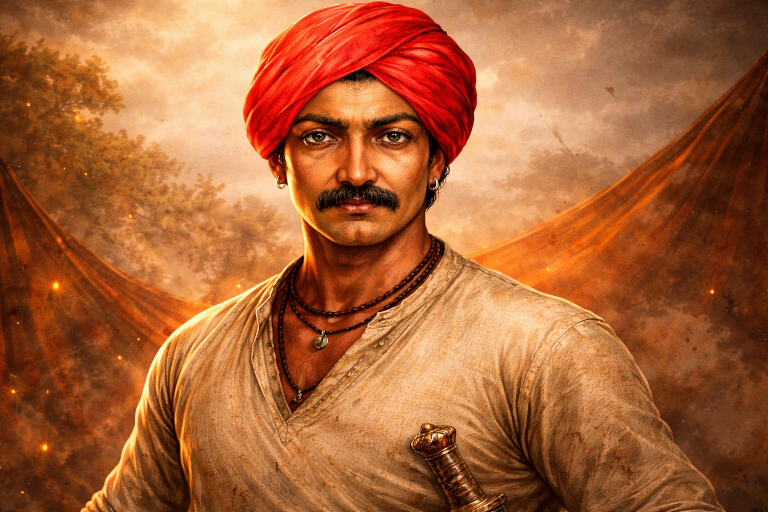
Today, Raghoji Bhangre is remembered as a pioneering tribal freedom fighter of Maharashtra and a lasting symbol of indigenous land rights, resistance, and cultural pride.